What is a containment dyke?
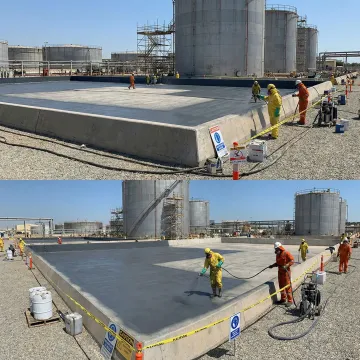
A containment dyke (or dike) is a secondary containment structure—typically a walled enclosure or berm surrounding storage tanks, chemical processing equipment, or petroleum handling areas—designed to capture and contain spills, leaks, or tank failures to prevent environmental contamination. Dykes are required by EPA SPCC regulations for facilities storing oil or hazardous materials above threshold quantities. The contained volume must be sufficient to hold the largest tank's contents plus precipitation. AmTech lines containment dykes with chemical-resistant barriers like DuraChem® polylinings or fiberglass composites to prevent permeation through the substrate.
What is a containment liner?
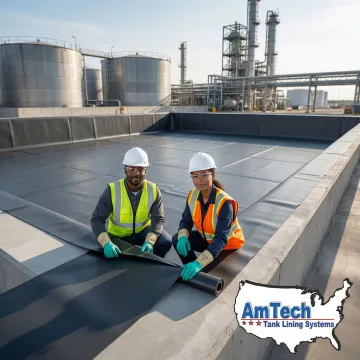
A containment liner is a chemical-resistant barrier installed on the floor and walls of a secondary containment structure to prevent spilled liquids from permeating through the substrate (concrete, steel, or earth) and reaching groundwater or soil. Liners can be spray-applied polylinings like AmTech's DuraChem® 500 series (which cure instantly and form seamless monolithic shells), hand-laid fiberglass composites using glass/Kevlar veils and polymer resins, or cementitious systems like HydraStone® for water-based containment. The liner material is selected based on stored chemicals, operating temperatures, and regulatory requirements.
How long does containment dike liner installation take?
Installation timelines vary based on containment size, substrate condition, and lining system selected. Small to medium containment areas (under 5,000 sq ft) using DuraChem® instant-cure polylining typically require 3-5 days including surface preparation, structural repairs, and liner application. Larger projects or complex fiberglass composite installations may require 1-2 weeks. AmTech's DuraChem® system eliminates multi-day cure times required by traditional epoxy coatings, allowing facilities to return containment areas to service within 24-48 hours after application. Emergency projects receive expedited scheduling with crews mobilized within 24 hours.
What chemicals can containment liners resist?
AmTech's DuraChem® 500 series polylinings resist a broad spectrum of industrial chemicals including sulfuric acid, hydrochloric acid, caustic soda, sodium hypochlorite, ferric chloride, petroleum products (crude oil, gasoline, diesel, jet fuel), alcohol-blended fuels (E10-E85), biodiesel, wastewater environments with hydrogen sulfide exposure, and many organic solvents—at varying concentrations and temperatures. Fiberglass-reinforced liners are custom-engineered with specific resin matrices (polyester, vinylester, or epoxy) and reinforcing veils to match your facility's exact chemical service conditions. AmTech's field engineers evaluate stored substances, operating temperatures, and exposure cycles to specify the optimal system for long-term performance.
Do containment liners comply with EPA SPCC regulations?
Yes. AmTech's containment lining systems are designed and installed to meet EPA Spill Prevention, Control, and Countermeasure (SPCC) requirements for facilities storing oil and petroleum products above regulatory thresholds. Our liners provide the impermeable barrier mandated by SPCC plans to prevent spilled liquids from reaching navigable waters or groundwater. All installations include documentation suitable for EPA inspections, including material certifications, thickness measurements, and as-built drawings. AmTech's field engineers can review your facility's SPCC plan and recommend compliant lining solutions tailored to your specific regulatory requirements and state environmental standards.
Can you repair existing damaged containment liners?
Absolutely. AmTech provides emergency and scheduled repair services for damaged, deteriorated, or failed containment liners. Crews assess the extent of damage using visual inspection and ultrasonic testing, remove failed sections, repair substrate damage (cracks, corrosion, structural defects), and install new lining material that bonds seamlessly to existing systems. For aging epoxy or polyurea liners exhibiting blistering, delamination, or chemical attack, AmTech can overlay a new DuraChem® polylining system that bonds directly to prepared substrates without full liner removal—significantly reducing project costs and downtime while restoring full containment integrity and regulatory compliance.
What is the lifespan of a containment dike liner?
Liner lifespan depends on the system installed, stored chemicals, exposure conditions, and maintenance practices. AmTech's DuraChem® 500 series polylinings typically provide 15-25+ years of service life in petroleum and chemical containment applications when properly maintained. Fiberglass composite liners can exceed 20-30 years with appropriate resin selection and UV protection. HydraStone® cementitious linings in water-based containment often last 30+ years due to their integration with the concrete substrate. All AmTech installations include our Blue Check warranty program, with specific coverage terms based on the lining system and application. Regular inspections and minor maintenance extend service life significantly.
Do you provide emergency containment liner repair services?
Yes. AmTech maintains emergency response capabilities with experienced crews stationed throughout the United States and Canada, enabling rapid deployment for critical containment failures. When facilities experience liner breaches, structural damage, regulatory shutdowns, or unexpected chemical exposure requiring immediate attention, our teams mobilize with proprietary repair materials including DuraChem® instant-cure polylinings, fiberglass laminate systems, PLS 755 Tank Tape for temporary sealing, and portable surface preparation equipment. Emergency services include rapid damage assessment, temporary containment measures, structural repairs, liner restoration, and regulatory documentation—minimizing environmental risk, facility downtime, and compliance exposure.