What are NDT inspections?
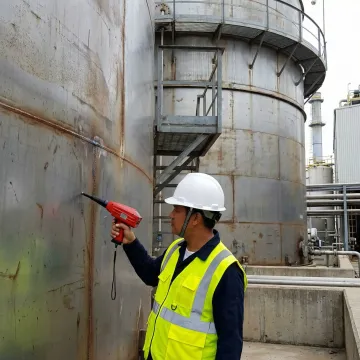
NDT (non-destructive testing) inspections use advanced technologies like ultrasonic testing (UT) to assess tank integrity without damaging or compromising the structure. Ultrasonic equipment sends high-frequency sound waves through tank walls; the reflected signals reveal remaining wall thickness, internal corrosion, and subsurface defects invisible to visual inspection. This method is critical for compliance with EPA, API 653, and state UST regulations, enabling facility managers to detect problems early, prevent catastrophic failures, and make informed decisions about repair versus replacement—all while keeping tanks in service during the inspection process.
NDT tank inspections must be performed by trained, certified technicians using calibrated ultrasonic testing equipment and following industry-standard protocols (API 653, ASTM standards). AmTech's field crews include engineer-trained inspectors and NLPA Special Inspectors—one of the most rigorous certifications in the underground storage tank industry. Our inspectors understand tank construction methods, corrosion mechanisms, regulatory requirements, and structural engineering principles necessary to accurately interpret UT data and provide actionable recommendations. This level of expertise ensures your inspection results are reliable, defensible during regulatory audits, and suitable for insurance and compliance documentation.
How often should tanks undergo NDT inspection?
Inspection frequency depends on tank type, stored substance, age, and regulatory requirements. API 653 typically requires internal inspections every 10 years and external inspections every 5 years for above-ground petroleum storage tanks. Underground storage tanks (USTs) may require more frequent testing under state environmental regulations—often every 3-5 years or whenever corrosion protection systems are serviced. Tanks storing aggressive chemicals, operating in corrosive environments, or showing signs of deterioration should be inspected more frequently. AmTech can establish a customized inspection schedule based on your tank's service history, corrosion rates, and compliance obligations.
What is ultrasonic permeation detection?
Ultrasonic permeation detection is a specialized NDT technique that identifies microscopic pathways through tank walls where liquids can migrate—often called pinholes, permeations, or microleaks. These defects are too small to cause visible leaks but compromise secondary containment in double-wall tanks and create pathways for corrosion acceleration. The testing uses high-frequency ultrasonic transducers to detect changes in material density and bonding that indicate permeation. This method is especially critical for underground storage tanks where external inspection is impossible without excavation, and for facilities requiring continuous environmental compliance monitoring under EPA and state UST regulations.
Can NDT detect corrosion under existing coatings?
Yes. Ultrasonic testing penetrates through coatings, linings, and paint layers to measure the actual remaining thickness of the underlying steel or fiberglass substrate. This capability is invaluable for assessing tanks with aging protective coatings—you can determine whether corrosion is occurring beneath the coating without the expense and downtime of complete coating removal. UT data reveals whether substrate deterioration has reached critical levels requiring immediate repair or if the existing coating is still effectively protecting the tank structure. AmTech's engineers use thickness mapping to identify localized corrosion hot spots that may not be evident from external visual inspection.
What happens if NDT inspection finds critical defects?
When ultrasonic testing identifies critical defects—such as wall thickness below minimum API 653 requirements, active permeations, or structural compromise—AmTech provides immediate prioritized recommendations. For emergency situations (active leaks, imminent failure risk), we can mobilize repair crews rapidly across all 50 states to perform temporary containment and permanent repairs. For less urgent findings, we provide detailed cost estimates, repair options (welded steel patches, lining systems, structural reinforcement), and timeline projections. Our integrated inspection-and-repair capability means you work with a single contractor from assessment through restoration, eliminating coordination delays and ensuring the repair strategy directly addresses the identified defects.
Are NDT inspection reports accepted by regulatory agencies?
Yes. AmTech's NDT inspection reports are structured to meet the documentation requirements of EPA, state UST programs, API 653, NFPA, and local fire marshals. Reports include calibrated equipment certifications, inspector credentials (including NLPA Special Inspector certification), detailed thickness maps with measurement locations, photographic documentation, compliance assessments against applicable standards, and engineer-stamped recommendations. These reports are routinely submitted to regulatory agencies during compliance audits, permit renewals, and tank certification processes. They also satisfy insurance carrier requirements for tank integrity verification and risk assessment documentation.
How much does an NDT tank inspection cost?
Inspection costs vary based on tank size, configuration (single-wall vs. double-wall), accessibility, number of tanks, and required testing scope. A basic ultrasonic thickness survey for a small single-wall AST may cost a few thousand dollars, while comprehensive inspection programs for large tank farms or complex double-wall UST systems require more extensive investment. AmTech provides detailed project quotes after reviewing your tank specifications, regulatory compliance needs, and inspection objectives. Many facility managers find that proactive NDT inspections save tens of thousands of dollars by identifying repairable defects before they escalate into emergency replacements, environmental incidents, or regulatory penalties.