What are the different types of tank inspections?
Tank inspections fall into several categories: Visual inspections use cameras or direct entry to assess interior condition, corrosion, and lining integrity. Ultrasonic thickness testing (UT) measures wall thickness to detect corrosion thinning and permeations non-destructively. API 653 inspections are comprehensive assessments for atmospheric storage tanks covering structural integrity, foundation stability, shell thickness, roof condition, and appurtenances, required at intervals based on corrosion rates and service. Pre-service inspections verify new tank construction quality. In-service inspections monitor tanks during operation for developing issues. Out-of-service inspections occur during planned shutdowns for thorough internal and external assessment. Emergency inspections respond to failures, leaks, or suspected integrity compromises requiring immediate evaluation.
What is an API 653 inspection?
API 653 is the American Petroleum Institute standard governing inspection, repair, alteration, and reconstruction of steel aboveground atmospheric storage tanks in petroleum service. An API 653 inspection is a comprehensive assessment performed by authorized inspectors to determine if a tank remains fit for continued service. The inspection includes ultrasonic thickness measurements of shell courses, bottom plates, and roof components; visual examination of internal and external surfaces for corrosion, pitting, and cracking; foundation and settlement evaluation; assessment of nozzles, manholes, and appurtenances; review of operating history and previous inspection records; and calculation of remaining corrosion allowance to establish the next inspection interval. Tanks failing to meet API 653 criteria must be repaired, altered per the standard's requirements, or removed from service.
How does live video imaging work for tank inspections?
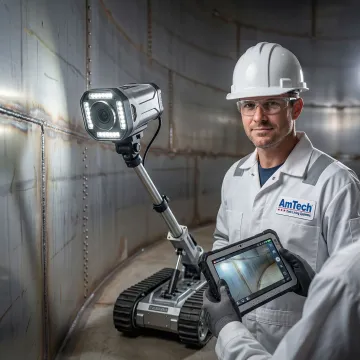
Live video imaging uses specialized fiber-optic camera systems inserted through existing tank openings like manways, nozzles, or inspection ports. High-intensity LED lighting illuminates the interior while high-definition cameras capture real-time footage transmitted to monitors outside the tank. Technicians maneuver the camera through the tank using articulating poles or remotely operated equipment, systematically documenting every interior surface. The process eliminates confined space entry requirements, reduces inspection time dramatically, and provides permanent video documentation. Facility personnel watch the inspection live, asking questions and directing the camera to areas of concern. Engineers analyze the footage immediately, identifying corrosion patterns, lining failures, structural defects, and sediment accumulation. The recorded video serves as baseline documentation for future comparative inspections and regulatory compliance evidence.
Can you inspect a tank without taking it out of service?
In many cases, yes—depending on tank configuration, product stored, and access availability. Vapor space inspections can be performed on tanks in service if adequate freeboard exists and product level can be lowered below nozzle or manway openings. External inspections of shell, roof, foundation, and appurtenances proceed without service interruption. Ultrasonic thickness testing of exterior surfaces is performed while tanks remain operational. However, comprehensive interior inspections typically require the tank to be emptied, cleaned, and ventilated to ensure inspector safety and enable thorough assessment. AmTech's live video imaging significantly reduces downtime compared to traditional confined space entry inspections, often completing documentation in hours rather than days, allowing faster return to service while maintaining inspection thoroughness and worker safety.
How often should industrial tanks be inspected?
Inspection frequency depends on several factors: tank age, stored product corrosivity, operating temperature, previous corrosion rates, lining condition, and regulatory requirements. API 653 establishes risk-based inspection intervals for petroleum tanks, typically ranging from 5 to 20 years based on calculated corrosion rates and remaining shell thickness. Tanks storing aggressive chemicals may require annual or biennial inspections. Lined tanks should be inspected at intervals matching expected lining service life—usually 10 to 25 years depending on the lining system and service conditions. Underground storage tanks under EPA jurisdiction require tightness testing and corrosion protection monitoring at prescribed intervals. Municipal water tanks typically follow 3 to 5 year inspection cycles per AWWA standards. Facilities should also inspect following any operational upset, product change, or suspected integrity issue.
What causes tank inspection failures?
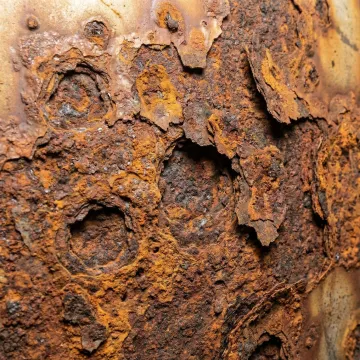
Common issues identified during inspections include external corrosion from moisture, soil contact, or atmospheric exposure; internal corrosion from stored product chemistry, water bottoms, or microbiological activity; lining deterioration from age, chemical attack, or poor initial application; pitting corrosion concentrated in localized areas; weld seam corrosion from crevice conditions or metallurgical factors; bottom plate perforations from underside corrosion or top-side product attack; shell thinning below minimum thickness requirements; foundation settlement causing shell distortion; roof leaks allowing water ingress; and nozzle or appurtenance leaks from corrosion or mechanical damage. Many failures are preventable through regular inspection, timely repairs, proper lining systems, and adherence to recommended maintenance intervals. AmTech's inspections identify developing problems before they progress to catastrophic failure.
What happens after the inspection is completed?
AmTech provides a comprehensive written report including detailed findings, photographic or video documentation, thickness measurement data sheets, corrosion rate calculations where applicable, remaining service life estimates, and prioritized repair recommendations with scope and cost estimates. For critical deficiencies requiring immediate attention, we provide emergency repair options and rapid mobilization capability. For longer-term maintenance needs, we develop phased repair plans that align with your budget cycles and operational schedules. The inspection documentation satisfies regulatory compliance requirements and serves as permanent records for insurance, asset management, and future reference. Because AmTech performs both inspection and repair services, there's seamless transition from assessment to restoration—we stand behind our recommendations with proven repair solutions and warranty programs, eliminating the coordination challenges of using separate inspection and repair contractors.
Do you provide emergency inspection services?
Yes, AmTech maintains rapid-response inspection capability for urgent situations including suspected leaks, sudden product loss, visible structural damage, regulatory shutdown orders, and pre-purchase assessments on tight timelines. Our field crews are strategically positioned throughout the United States, Canada, and the Caribbean, enabling quick mobilization—often within 24 to 48 hours of contact. Emergency inspections include immediate verbal reporting of critical findings so you can make time-sensitive decisions about containment, repair, or replacement. We bring portable inspection equipment including ultrasonic testing devices, video inspection systems, and thickness measurement tools to provide comprehensive on-site assessment. If inspection reveals immediate repair needs, our crews carry proprietary repair materials and can often begin restoration work immediately, minimizing facility downtime and environmental risk. Contact our project engineering team at 888-839-0373 for emergency inspection dispatch.