What does a tank inspector do?
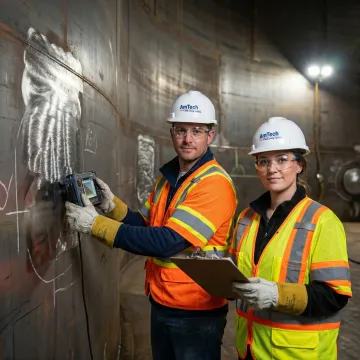
A tank inspector conducts comprehensive evaluations of storage tank integrity using visual assessment, ultrasonic thickness testing, and non-destructive examination methods to identify corrosion, permeations, structural damage, and lining deterioration. AmTech's NLPA Special Inspectors document wall thinning, map corrosion patterns, evaluate existing coatings, and assess substrate condition to determine whether repair, re-lining, or replacement is required. Inspections verify compliance with API 653, NFPA, EPA, and local regulations, and provide facility owners with detailed reports including remaining wall thickness measurements, recommended corrective actions, and estimated service life projections.
What is the procedure of tank cleaning?
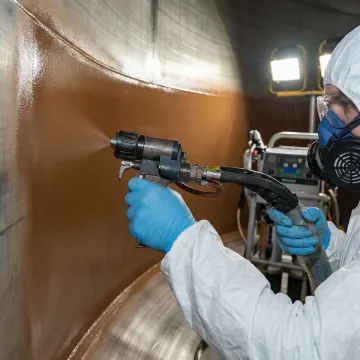
Tank cleaning begins with complete draining and ventilation, followed by removal of sludge, sediment, and residual product using mechanical scrapers, vacuum trucks, or high-pressure water blasting. For tanks requiring lining or coating work, AmTech performs surface preparation via abrasive blasting (sandblasting), hydroblasting, or chemical cleaning to remove all rust, scale, old coatings, and contaminants down to bare substrate. The interior is then profiled to the required surface standard—typically SSPC-SP5 White Metal or SSPC-SP10 Near-White Blast—and verified using replica tape or digital gauges before lining application. All waste materials are contained, collected, and disposed of in accordance with environmental regulations.
How much does it cost to have a gas tank cleaned?
Gas tank cleaning costs vary widely based on tank size, accessibility, level of contamination, regulatory requirements, and whether structural repairs or lining work are needed. A basic cleaning and inspection for a small underground storage tank might range from $2,000 to $5,000, while larger above-ground petroleum tanks requiring full abrasive blasting, structural steel repairs, and re-lining can exceed $25,000 to $100,000 or more. AmTech provides detailed project estimates after on-site inspection and assessment of your specific tank configuration, service history, and compliance needs. Contact our project engineers at 888-839-0373 for a no-obligation evaluation and quote.
How often should industrial storage tanks be inspected?
API 653 recommends formal internal inspections every 10 years for atmospheric storage tanks, though frequency varies based on stored product corrosivity, operating conditions, and previous inspection findings. Tanks storing highly corrosive chemicals or operating in aggressive environments may require inspection every 5 years or less. External visual inspections should be conducted annually, with ultrasonic thickness testing performed on a risk-based schedule. AmTech develops customized inspection intervals for each facility based on tank age, service history, lining condition, and regulatory requirements to optimize safety while minimizing unnecessary downtime.
What are the signs that a storage tank needs repair?
Common indicators include visible rust or corrosion on exterior surfaces, active leaks or product seepage, interior lining deterioration (blistering, peeling, delamination), unexplained product loss, contaminated stored product, failed leak detection system alarms, out-of-spec ultrasonic thickness readings, structural deformation or bulging, and failed regulatory compliance inspections. Tanks storing potable water may show discoloration, metallic taste, or sediment in the water supply. Any of these signs warrant immediate professional inspection to prevent environmental incidents, regulatory violations, or catastrophic tank failure.
Can AmTech repair tanks without full replacement?
Yes—AmTech specializes in cost-effective tank restoration that extends asset life by decades without the expense and disruption of full replacement. Our crews perform API 653-compliant structural steel repairs, fiberglass laminate reconstruction, concrete patching, and nozzle replacement, then apply proprietary lining systems that create like-new interior barriers. The Genesis Double Wall Retrofit System even converts single-wall underground tanks into fully compliant double-wall tanks with interstitial monitoring, eliminating excavation costs. Most tanks can be restored for 30-50% of replacement cost, with minimal facility downtime and full regulatory compliance.
What lining system is best for my tank's stored product?
Lining selection depends on chemical compatibility, operating temperature, mechanical stress, and regulatory requirements. AmTech's DuraChem® 500 series polylinings excel in aggressive chemical and wastewater environments with instant cure and zero VOCs. HydraStone Alkrete® cementitious linings are ideal for potable water and high-temperature applications up to 900°F. AT BiFlex® fiberglass systems handle petroleum products and moderate chemicals. Armor Shield® UL-listed coatings meet fire suppression water standards. Our field engineers analyze your tank's specific service conditions and specify the optimal system for maximum longevity and performance.
How quickly can AmTech respond to a tank emergency?
AmTech maintains strategically positioned crews across all 50 states, Canada, and the Caribbean for rapid emergency deployment—often mobilizing within 24-48 hours of initial contact. Our emergency response vehicles carry proprietary repair materials including DuraChem® instant-cure linings, PLS 755 Tank Tape, fiberglass laminate systems, and welding equipment to address most failure scenarios on-site. We provide temporary containment and leak mitigation immediately upon arrival, then execute permanent repairs to restore tank integrity and return your facility to safe operation as quickly as possible.