Introduction
The coating inside a bolted steel tank is the only barrier between stored contents and bare steel. When it fails — even in a small area — corrosion doesn't wait. Pitting can begin within weeks, and by the time it's visible, the damage is already structural.
The challenge most operators face: coatings degrade gradually, not suddenly. By the time failure is obvious, active corrosion may already be eating into the steel. That leaves facilities choosing between a targeted spot repair, a full reline, or a costly tank replacement — and picking the wrong option means either wasted budget or a recurring problem.
This guide covers what determines how long a bolted tank coating lasts, the specific failure signs to watch for, and a practical framework for deciding when relining is the smarter investment over recoating or replacement.
Key Takeaways
- Bolted tank coatings typically last 10–30 years depending on coating type, stored contents, and application quality
- Panel joints, bolt penetrations, and gasket interfaces are the primary failure zones in bolted tanks
- Improper surface preparation accounts for up to 80% of coating failures, according to Sherwin-Williams
- Early failure indicators — blistering, rust bleed at seams, DFT loss — are detectable before structural damage occurs
- Full relining extends service life 15–25+ years at a fraction of tank replacement cost
How Long Do Bolted Tank Coatings Last?
Lifespan varies more than most specs suggest — and the gap between coating types is significant. The table below breaks it down:
| Coating Type | Expected Lifespan | Notes |
|---|---|---|
| Standard epoxy | 5–10 years (recoat cycle) | Lower cost; shorter service interval |
| High-solids / ultra-high-solids epoxy | 20–30 years (manufacturer claims) | Sherwin-Williams, Tnemec cite up to 30 years |
| Polyurethane topcoat systems | 20–30 years with full system | Better UV resistance as a topcoat layer |
| Cementitious linings | Variable; well-suited for water/wastewater service | No universally published lifespan range |
| 100% solids polyurea | 10–20+ years | Twice the life expectancy of standard epoxy per Pittsburg Tank data |
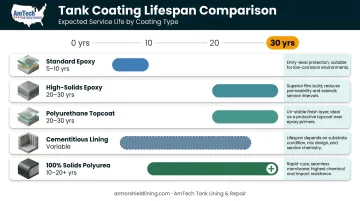
These figures come from manufacturer documentation. No AWWA or AMPP standard publishes universal lifespan guarantees by coating type — actual performance is site-specific.
Why Bolted Tanks Are Harder on Coatings
Those site-specific variables start with the tank's own structure. Bolted tanks create mechanical stress that welded tanks don't: panel joints flex under thermal cycling and hydrostatic load, bolt penetrations concentrate stress, and gasket interfaces trap moisture. These edges, seams, and bolt connections are where corrosion typically begins — and where coating adhesion is hardest to maintain.
Factory vs. Field Application
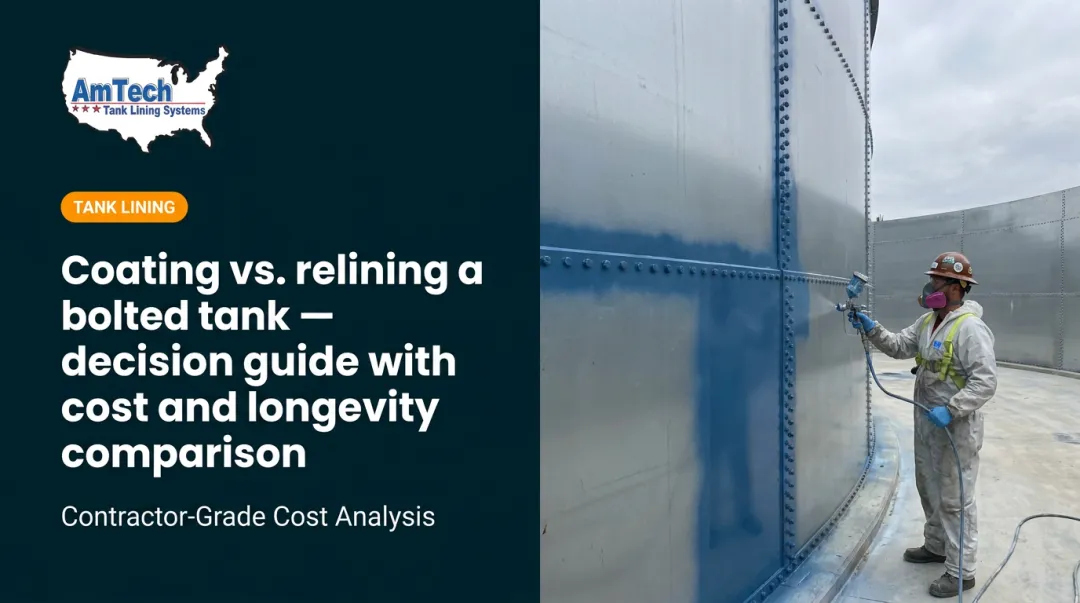
Factory powder-coated panels applied under controlled conditions consistently outperform field-applied liquid coatings. One bolted tank manufacturer cites factory fusion-bonded epoxy as avoiding several common failure points that field application introduces:
- Sagging and pinholes from inconsistent mil thickness
- Weather delays that compromise cure windows
- Uneven coverage at panel edges, bolt holes, and interior corners
The rated lifespan of any coating assumes ideal surface preparation and controlled application — conditions that field crews rarely achieve across every joint and penetration.
Key Factors That Affect Bolted Tank Coating Lifespan
Coating lifespan in bolted steel tanks rarely comes down to one factor. The full picture involves stored contents, surface prep quality, environmental exposure, system selection, and how consistently the coating gets inspected. Each variable compounds the others.
Stored Contents and Chemical Exposure
The chemistry of what's inside the tank directly determines how aggressively the coating degrades. Potable water is relatively benign. Wastewater, chemicals, fuels, and petroleum products each impose different stresses : pH extremes, solvents, hydrocarbons, or biological activity.
One frequently overlooked failure trigger is repurposing a tank mid-life. A coating specified for water storage may fail rapidly if the tank is switched to fuel or chemical service. Changing contents without upgrading the lining system is one of the leading causes of premature coating failure in industrial settings.
Surface Preparation Quality
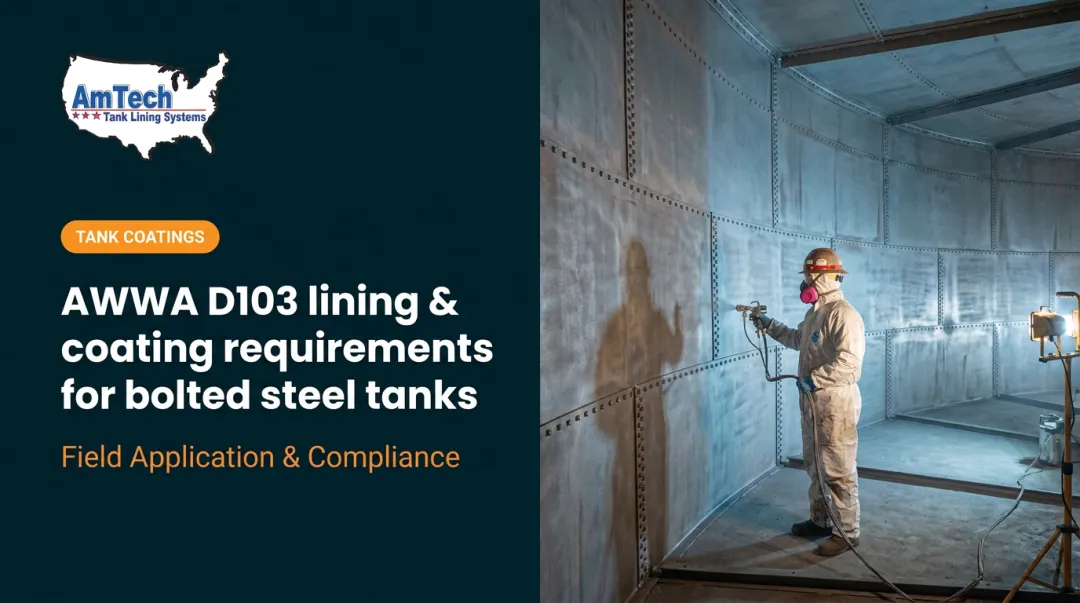
This is the single biggest variable in coating performance. According to Sherwin-Williams, improper surface preparation accounts for up to 80% of all coating failures. The issue isn't just blast grade — it's achieving consistent cleanliness across bolt holes, panel edges, and internal corners where surface prep tools can't always reach effectively.
Flash rust is a specific risk in field conditions: when humidity causes surface rust to reform between blasting and coating application, adhesion is compromised before the first coat is applied. AmTech's surface preparation work is performed to SSPC-SP5 White Metal, SSPC-SP10 Near-White Blast, or SSPC-SP6 Commercial Blast standards depending on the lining system selected.
Environmental and Climate Exposure
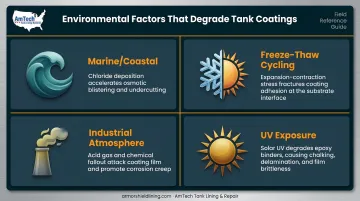
- Marine and coastal environments: Steel corrosion accelerates significantly above 70% relative humidity, with chloride deposition rates of 10–100 mg Cl⁻/m²/day driving rapid coating breakdown
- Freeze-thaw cycling: Repeated expansion and contraction stresses adhesion at panel joints
- Industrial atmospheres: Chemical plant and wastewater environments create corrosive airborne exposure on exterior surfaces
- UV exposure: Degrades unprotected epoxy topcoats; polyurethane or fluoropolymer topcoats extend exterior coating life by years
ISO 12944:2018 classifies the most aggressive environments as C5 (very high) and CX (extreme). Both categories require adjusted coating selection and more frequent maintenance intervals than standard specifications assume.
Coating System Selection
Mismatched chemistry for the application is a major source of early failure. The right system depends on what's stored:
- Cementitious linings (HydraStone Alkrete): suited for potable water and wastewater service
- 100% solids epoxy or polyurea (DuraChem 500 series): preferred for chemical, fuel, and petroleum applications
- Polyurethane topcoats: add UV resistance to exterior systems
- Standard epoxy: adequate for lower-demand service but requires shorter recoat cycles
Maintenance and Inspection Consistency
Coatings that receive regular inspections and prompt spot repairs last measurably longer than those left until visible failure occurs. A small defect (a pinhole, a delaminated edge) becomes an active corrosion site the moment moisture gets underneath.
That corrosion undermines adhesion across a wider area. Left unaddressed, a $500 spot repair can escalate into a $50,000 relining project.
Warning Signs Your Bolted Tank Coating Is Failing
Catching failure early is the difference between a targeted repair and emergency relining. Here's what to look for.
Visible Surface Deterioration
| Sign | What It Means |
|---|---|
| Blistering / bubbling | Moisture trapped beneath the coating film |
| Delamination (sheets or flakes) | Adhesion failure between coating and substrate |
| Chalking | UV degradation of the coating film surface |
| Discoloration or staining | Possible corrosion product migration beneath the film |
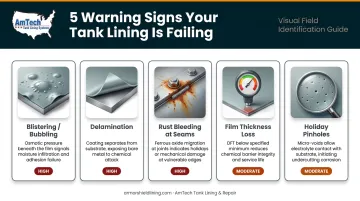
Rust Bleeding at Seams and Bolt Connections
Red or orange staining migrating outward from panel joints or bolt heads is a specific bolted tank failure indicator. When you see it, two things have already happened:
- Coating protection has failed at these stress concentration points
- Active corrosion of the steel substrate is underway
This requires immediate professional assessment — not just cosmetic attention.
Film Thickness Loss
Dry film thickness (DFT) measurements reveal coating wear before it's visible. When measured DFT falls below the manufacturer's minimum recommended threshold, the coating is no longer providing full corrosion protection — even if it looks intact.
SSPC-PA 2 conformance criteria allow spot measurements down to 80% of the specified minimum before a nonconformance is flagged. Anything below that threshold requires action.
Ultrasonic DFT measurement per ASTM D7091-22 is the standard method for nondestructive field measurement and is a core component of professional tank inspections.
Holiday Detection and Pinhole Corrosion
Holiday detection (electrical discontinuity testing per AMPP SP0188-2024) identifies pinholes and thin spots that visual inspection misses. A holiday found during inspection is an early warning — not yet a structural emergency. Left unaddressed, even a single pinhole can initiate through-wall corrosion within one to two inspection cycles — turning a minor repair into a full reline.
Compliance and Performance Changes
In potable water applications, coating degradation can surface as taste or odor complaints before it registers on a gauge. For tanks operating under NSF/ANSI 61 requirements, a water quality test failure tied to coating breakdown can trigger regulatory action. If any of these signals appear — operational or visual — treat them as cause for a formal inspection, not a watch-and-wait.
When Relining Makes More Sense Than Recoating or Replacement
When coating failure is confirmed, three options exist: spot repair, full relining, or tank replacement. Relining is often the overlooked middle path — restoring near-new performance without the cost of a new tank.
When Spot Recoating Is Sufficient
Localized repair works when:
- Coating failure is isolated to a small percentage of total surface area
- The underlying steel shows no measurable section loss
- Existing coating is well-adhered with DFT measurements within acceptable range across most of the tank
When Full Relining Is the Right Choice
Full relining is warranted when any of these conditions apply:
- Widespread delamination or adhesion failure across a significant portion of the tank surface
- DFT measurements below minimum spec across multiple zones, not just isolated areas
- Tank is being repurposed for more aggressive contents requiring a higher-performance system
- Coating age exceeds expected service life and failure is imminent even where not yet visible
- Regulatory compliance (NSF/ANSI 61, API, NFPA) requires a certified lining system
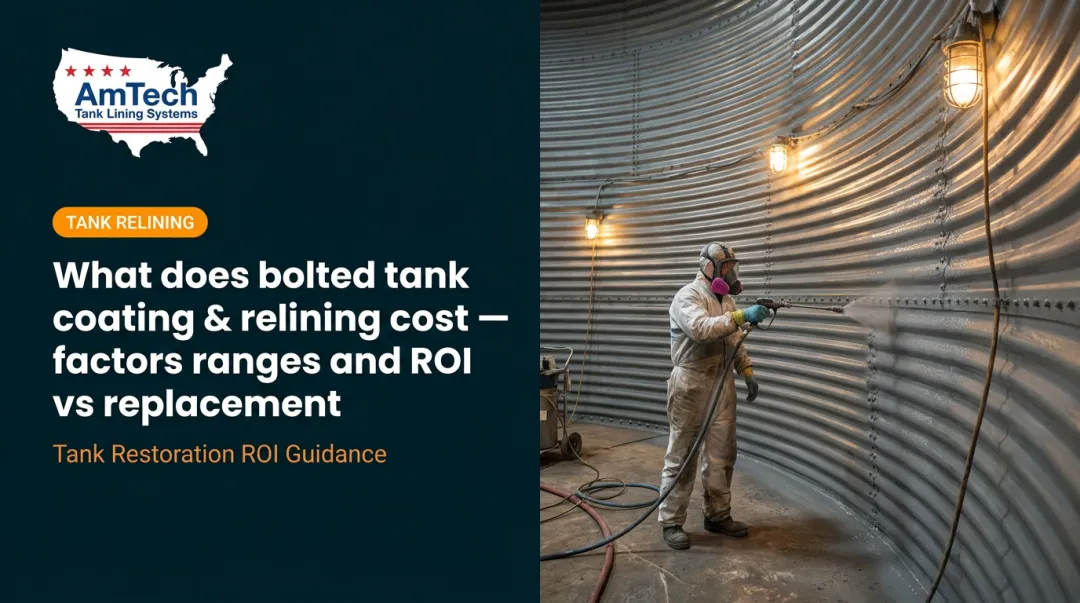
A properly executed reline on a structurally sound bolted tank extends service life by 15–25+ years, depending on the system used. Total relining cost — mobilization, surface preparation, application, and cure — is a fraction of new tank replacement once permitting delays, procurement lead times, demolition, and civil work are factored in.
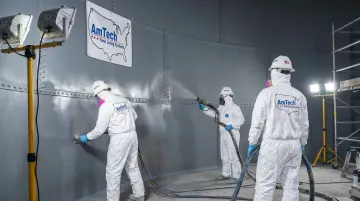
That cost advantage compounds when the lining system is matched correctly to the application. AmTech Tank Lining & Repair performs bolted tank relining using NSF/ANSI 61-compliant systems, including the proprietary DuraChem 500 series 100% solids polylining and HydraStone Alkrete cementitious linings for potable water, industrial, and municipal applications. Work is performed by AmTech's own engineer-led field crews — no subcontractors — and backed by the BLUE CHECK warranty program.
When Tank Replacement Is the Only Option
Replacement becomes necessary when:
- Ultrasonic thickness testing confirms structural steel loss exceeding acceptable limits
- Widespread panel or seam damage compromises tank geometry
- Total replacement cost approaches relining cost due to tank age, size, or severe access constraints
For tanks with documented inspection histories and timely maintenance, structural loss severe enough to require replacement is uncommon — which is precisely why routine monitoring pays off.
Bolted Tank Coating Inspection and Maintenance Schedule
Inspection frequency should align with applicable standards and be adjusted for stored contents, coating age, and environmental conditions.
Key standards that govern bolted tank inspection:
- AWWA D103-19: Covers factory-coated bolted carbon steel tanks for water storage
- AWWA M42: Recommends tanks be inspected inside and outside at least every 3 to 5 years
- API 653: For petroleum/chemical service tanks — external inspection every 5 years, internal inspection initially at 10 years (adjusted by risk-based inspection findings)
- NFPA 25: For fire protection tanks — steel tank interiors without corrosion protection on a 3-year cycle; exterior painted surfaces annually
Practical Inspection Cadence
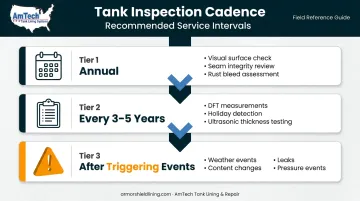
- Annually: Check surface condition, seam integrity, visible corrosion, and rust bleed at joints
- Every 3–5 years: Commission a detailed professional inspection covering DFT measurements, holiday detection, and ultrasonic thickness testing of the steel substrate
- After triggering events: Inspect following significant weather events, chemical content changes, leaks, or pressure events
AmTech's NLPA Special Inspector conducts detailed tank integrity evaluations — including ultrasonic permeation testing, structural assessments, and surface condition analysis — that provide a far more complete picture than a standard visual walkthrough.
Documentation Matters
Those inspection findings are only useful if they're captured and tracked. A documented maintenance log — recording inspection dates, findings, DFT measurements, and repairs — is a regulatory requirement in many jurisdictions and the most reliable tool for forecasting when relining will be needed. Facilities with consistent documentation can plan and budget for relining proactively instead of reacting to emergency failures.
Frequently Asked Questions
How long does a tank liner last?
Most tank liners last 15–25 years depending on coating type, stored contents, and maintenance consistency. Premium systems like 100% solids polyurea or cementitious linings in well-maintained tanks can reach or exceed the upper end of that range.
What causes bolted tank coatings to fail prematurely?
The leading causes are poor surface preparation before application, mismatched coating chemistry for the stored contents, mechanical coating stress at panel joints and bolt penetrations, and deferred maintenance that allows small defects to become active corrosion sites.
How do I know when my bolted tank needs relining rather than spot repairs?
When coating failure covers a significant portion of the tank surface, DFT measurements fall below minimum spec across multiple zones, or the tank is being repurposed for more aggressive contents, relining is the more reliable and cost-effective solution compared to repeated localized repairs.
Is relining a bolted tank worth it compared to replacing it?
Yes, provided the steel substrate is structurally sound. Relining restores full corrosion protection and regulatory compliance at a fraction of replacement cost, without the permitting delays and procurement lead times that new tank installation requires.
What type of lining system is best for a bolted steel tank?
It depends on stored contents. Cementitious linings perform well for potable water and wastewater. 100% solids epoxy or polyurea systems are preferred for chemical, fuel, and petroleum applications. A qualified lining engineer should review the full service profile before specifying any system.
How often should a bolted tank be professionally inspected?
AWWA M42 guidance recommends a full inside and outside inspection every 3 to 5 years, with annual visual checks in between. Tanks storing aggressive chemicals or nearing coating end-of-life warrant more frequent inspections, including DFT measurements and holiday (pinhole/void) detection.