Can a leaking water tank be repaired?
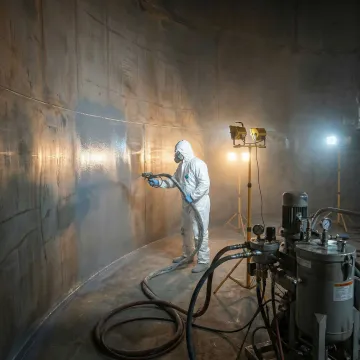
Yes, most leaking water tanks can be successfully repaired rather than replaced. AmTech repairs leaking hot and cold water storage tanks using a comprehensive process: we first locate the leak source through visual inspection and ultrasonic testing, then perform structural steel repairs (welding patches or replacing corroded sections), and finally apply our HydraStone Alkrete cementitious lining system to create a seamless, water-resistant barrier. This system is specifically engineered for water tank environments, resists softened water chemistry that accelerates corrosion, and can withstand temperatures up to 900°F. Repairs restore full containment integrity and often extend tank life by decades, avoiding the high cost of tank replacement.
How much does it typically cost to fix a leak?
Tank leak repair costs vary significantly based on leak severity, tank size, material type, and accessibility. Minor pinhole leaks in accessible areas may cost a few thousand dollars for localized patching and sealing, while extensive corrosion requiring steel replacement, large-area re-lining, or emergency mobilization can range from $10,000 to $50,000 or more. Underground tank repairs and those requiring confined space entry or specialized coatings increase costs. However, professional leak repair is almost always more cost-effective than full tank replacement, which can exceed $100,000 when including excavation, disposal, and installation. AmTech provides detailed assessments and transparent pricing after inspecting your specific leak situation.
Can a gas tank leak be repaired?
Yes, gasoline and fuel storage tank leaks can be repaired using specialized techniques and materials designed for petroleum service. AmTech repairs leaking fuel tanks through a multi-step process: we perform ultrasonic permeation detection to map all leak points (including those not yet visible), execute API 653-compliant steel repairs for structural damage, and apply our DuraChem 500 series polylining—a 100% solids system that bonds directly to steel, cures instantly, and resists gasoline, diesel, ethanol blends (E10, E15, E85), and biodiesel. For underground storage tanks, we also offer our Genesis double-wall retrofit system, which converts non-compliant single-wall tanks to fully compliant double-wall configuration with interstitial monitoring, eliminating excavation costs while meeting EPA and state environmental regulations.
How do you detect hidden tank leaks that aren't visible?
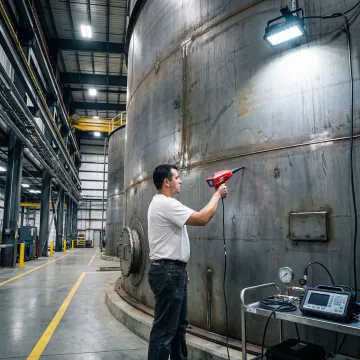
AmTech uses ultrasonic testing (UT) equipment to detect hidden leaks, permeations, and wall thinning invisible to visual inspection. This non-destructive testing method sends ultrasonic waves through tank walls and bottoms, measuring wall thickness with extreme precision to identify minute permeations, pinholes, and corrosion-thinned areas before they become catastrophic failures. Our technicians systematically scan the entire tank structure, creating a detailed map of compromised areas requiring repair. This technology is critical for underground storage tanks, double-wall tanks with interstitial spaces, and tanks storing hazardous materials where undetected leaks pose environmental and regulatory risks. UT inspection is often required for compliance with EPA, API, and state environmental regulations.
How long does emergency leak repair take?
Emergency leak repair timelines depend on leak severity and tank type, but AmTech prioritizes rapid response to minimize facility downtime. For active leaks, our crews typically mobilize within 24-48 hours to Bay Area sites with materials ready for immediate deployment. Temporary containment and leak sealing can often be completed within hours using our PLS 755 Tank Tape and rapid-application systems. Permanent structural repairs and lining installation vary from 1-5 days for most projects, though our proprietary DuraChem instant-cure lining systems dramatically reduce turnaround compared to traditional multi-coat epoxies that require days of cure time between coats. Tanks lined with DuraChem can often return to service the same day or next day after application.
What causes tank leaks and how can they be prevented?
Tank leaks result from multiple factors: external corrosion from soil contact and moisture, internal corrosion from stored substances (especially acidic chemicals, wastewater with hydrogen sulfide, and water with aggressive chemistry), galvanic corrosion at dissimilar metal joints, mechanical damage from ground shifting or impact, and age-related deterioration of original coatings or welds. Prevention requires regular inspection (visual and ultrasonic testing every 3-5 years), maintaining protective lining systems before substrate corrosion begins, proper cathodic protection for underground tanks, addressing water bottoms and sediment buildup promptly, and retrofitting manways for accessible inspection on older tanks. AmTech's preventive lining services and routine inspection programs help facilities avoid emergency leak situations entirely.
Do you repair both aboveground and underground storage tanks?
Yes, AmTech repairs both aboveground storage tanks (ASTs) and underground storage tanks (USTs) using techniques and materials specific to each configuration. For ASTs, we perform structural steel repairs per API 653 standards, including tank bottom replacement, shell patching, and nozzle repair, followed by protective lining application. For USTs, we offer specialized services including ultrasonic permeation testing (required for compliance), fiberglass tank laminate repair, steel tank welding and re-lining, and our proprietary Genesis double-wall retrofit system that converts single-wall USTs to compliant double-wall tanks without excavation. We handle petroleum fuel tanks, chemical storage tanks, water tanks, and wastewater tanks in both configurations across all 50 states.
Will tank leak repair meet regulatory compliance requirements?
Yes, all AmTech leak repairs are performed to meet or exceed industry and regulatory standards. Our work complies with API Standard 653 for tank inspection, repair, alteration, and reconstruction; EPA regulations for underground storage tank systems; NFPA codes for fire protection water storage; NSF standards for potable water tanks; and state environmental protection requirements. Our field engineers hold NLPA Special Inspector certification and OSHA 10/30 credentials. We provide complete documentation of inspection findings, repair procedures, materials used, and compliance testing results. Our proprietary lining systems carry UL listings, NSF approvals, and ANSI compliance certifications. This documentation is critical for facility audits, insurance requirements, and regulatory reporting.