What surface profile standards does AmTech achieve with sandblasting?
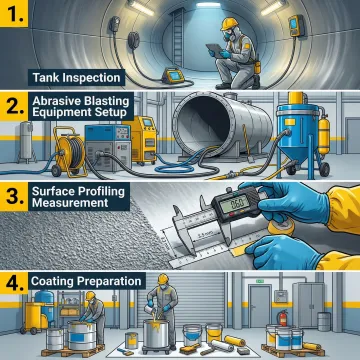
AmTech achieves industry-specified surface profiles including SSPC-SP5 White Metal Blast, SSPC-SP6 Commercial Blast Cleaning, and SSPC-SP10 Near-White Blast Cleaning depending on the lining system requirements. Our crews use replica tape and digital profile gauges to verify that the achieved profile matches the specification, ensuring maximum coating adhesion. Profile depth is matched to the specific lining being applied—whether DuraChem® 500 series polylining, HydraStone Alkrete® cementitious lining, or other coating systems—to prevent premature failure and optimize long-term tank performance.
What types of abrasive media do you use for tank cleaning?
AmTech selects abrasive media based on substrate material and project requirements. Options include garnet (for aggressive rust and mill scale removal on steel), glass beads (for controlled profiling), crushed walnut shells (for delicate fiberglass substrates where aggressive blasting could cause damage), aluminum oxide, steel grit, and other specialty abrasives. Softer media preserve substrate integrity on fiberglass and FRP tanks, while harder media are used for heavy corrosion removal on steel. Media selection is determined during the initial tank assessment by our engineer-led crews.
Can you perform tank cleaning in occupied facilities?
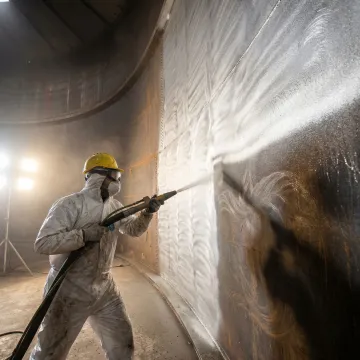
Yes. AmTech offers wet abrasive blasting and hydroblasting methods specifically for occupied facilities or environmentally sensitive sites where dust control is critical. Wet blasting significantly reduces airborne particulates compared to dry sandblasting, making it suitable for commercial buildings, hospitals, schools, and facilities that must remain operational during tank maintenance. Our crews establish containment systems, utilize dust collection equipment, and manage waste disposal in full compliance with environmental regulations and OSHA standards to minimize disruption.
How long does tank surface preparation typically take?
Project duration depends on tank size, substrate condition, extent of corrosion, and the required surface profile. A typical 10,000-gallon steel water tank requiring commercial blast cleaning may take 2-4 days including inspection, setup, blasting, and profile verification. Larger petroleum storage tanks or heavily corroded tanks requiring white metal profiles may take 1-2 weeks. Our instant-cure DuraChem® lining systems eliminate multi-day cure times between coats, significantly reducing total facility downtime compared to traditional epoxy lining projects that require days of cure time.
Do you provide surface preparation for concrete tanks?
Yes. AmTech performs surface preparation on concrete tanks using methods appropriate for the substrate—typically hydroblasting to remove laitance, efflorescence, loose material, and old coatings, or mechanical cleaning with power tools. Concrete surfaces are profiled to accept HydraStone Alkrete® cementitious linings or crystalline waterproofing systems like Port Seal® and Xypex. Damaged concrete is repaired, cracks are sealed, and surfaces are properly saturated with water to ensure optimal adhesion and crystalline activation. All work meets ACI and SSPC standards for concrete surface preparation.
What environmental monitoring do you perform before coating application?
AmTech crews measure and document ambient temperature, dew point, relative humidity, and substrate temperature before any coating or lining application proceeds. These environmental conditions must fall within the manufacturer's specified ranges to ensure proper coating cure and adhesion. If conditions are outside acceptable parameters—such as high humidity or temperatures below the coating's minimum application temperature—work is delayed until conditions stabilize. This critical step prevents coating failures caused by moisture entrapment, improper cure, or poor adhesion.
Can you clean and prepare fiberglass tanks without damaging them?
Absolutely. AmTech uses softer abrasive media like crushed walnut shells or low-pressure water blasting specifically for fiberglass and FRP tanks to avoid laminate damage while still achieving the necessary surface profile for re-lining. Our crews are trained to recognize fiberglass substrate vulnerabilities such as delamination, blistering, and UV degradation. Damaged areas are repaired using custom-assembled glass, Kevlar, or carbon veil laminates with polyester, vinylester, or epoxy resins matched to the tank's chemical service environment before final coating application.
Do you offer emergency tank cleaning and surface preparation?
Yes. AmTech provides emergency tank cleaning and surface preparation services for unexpected failures such as active leaks, sudden corrosion breakthroughs, lining failures, or regulatory shutdowns. Our experienced engineer-led crews mobilize rapidly across all 50 US states, Canada, and the Caribbean with specialized equipment and proprietary materials to perform immediate surface preparation and restoration. Emergency services include rapid damage assessment, temporary containment, abrasive blasting or hydroblasting, structural repairs, and instant-cure DuraChem® lining application to minimize facility downtime and prevent environmental incidents.