This guide examines the primary chemical tanker tank coating types, walks through the evaluation criteria that matter, explains what proper application demands, and outlines the maintenance practices that protect both cargo purity and vessel longevity. Whether you're specifying coatings for a newbuild, planning a dry-dock recoating, or investigating the root cause of a cargo contamination event, this framework offers practical, straightforward answers.
Key Takeaways
- Tank coatings create the barrier between corrosive cargoes and structural steel, preventing contamination and corrosion
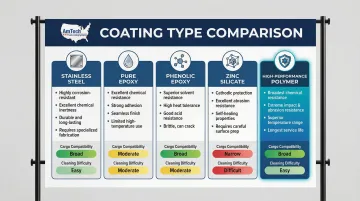
- Five primary coating types serve the chemical tanker fleet: stainless steel, pure epoxy, phenolic epoxy, zinc silicate, and high-performance polymer systems
- Selection depends on cargo compatibility, IBC Code compliance, cleaning cycles, and total ownership cost
- Most coating failures stem from poor application or deferred maintenance, not material defects
- Manufacturer resistance lists, routine inspection, and crew training all drive long-term coating performance
What Is Tank Coating in Chemical Tankers?
Tank coating is a protective lining applied to the interior surfaces of chemical tanker cargo tanks, preventing direct contact between corrosive or reactive liquid cargoes and the vessel's structural steel. Without this barrier, corrosion, cargo contamination, and structural degradation become inevitable — often within the first years of service.
The IMO International Bulk Chemical (IBC) Code categorizes liquid chemical cargoes into three broad groups: organic chemicals, inorganic chemicals, and vegetable oils, animal fats, and fish oils. Each category imposes specific containment requirements that directly shape coating selection and performance expectations.
Chemical tankers themselves fall into three classifications under the IBC Code:
- Type 1 vessels carry the most hazardous cargoes requiring maximum containment and the strictest coating standards
- Type 2 vessels transport moderately hazardous products with significant preventive measures
- Type 3 vessels handle the least hazardous cargoes requiring moderate containment
In practice, a Type 1 coating must resist aggressive solvents, acids, and repeated high-temperature cleaning cycles without blistering, softening, or allowing cargo absorption into the steel. That performance threshold drives every coating decision — from product selection to application method to inspection protocol.
Types of Chemical Tanker Tank Coatings
Stainless Steel Tank Linings
Stainless steel—typically austenitic grade 316L or ferritic-austenitic duplex grade 2205—is technically a tank material rather than a coating, but it functions as the primary "lining" in the majority of chemical tankers. Its corrosion resistance comes from a chromium-oxide passive layer on the metal surface. After exposure to aggressive acid cargoes, passivation procedures following ASTM A380 standards are required to restore it.
Key limitations include:
- Vulnerability to chloride-induced pitting, especially during seawater cleaning cycles
- Higher construction cost compared to coated carbon steel alternatives
- Ongoing passivation maintenance requirements
- Weld seam inspection requirements after exposure to halogenated or highly acidic cargoes
Epoxy-Based Coatings: Pure Epoxy and Phenolic Epoxy
Pure epoxy coatings are typically used in clean petroleum product (CPP) tankers with narrow cargo ranges and limited chemical resistance. Phenolic (novolac) epoxies combine epoxy and phenolic resins for broader chemical resistance, covering vegetable oils, CPP, and mildly acidic cargoes.
Both share a critical operational risk: high cargo absorption characteristics. Volatile solvents like styrene and benzene become trapped in the coating matrix during loading, then desorb into subsequent cargoes — a leading cause of off-spec claims and cargo rejection.
Improper cleaning agents or elevated water temperatures accelerate epoxy coating degradation, compounding the contamination risk.
Zinc Silicate Coatings
Zinc silicate is an inorganic coating suited for aromatic solvent cargoes, ketones, and alcohols. However, it performs poorly with acidic or alkaline cargoes: manufacturer data sheets limit zinc silicate to a pH range of 6 to 9.
The open, porous matrix and rough surface profile make zinc coatings inherently difficult to clean. Zinc salt deposits form during cargo service and contaminate sensitive products like jet fuel and edible oils, which is why charterers typically prohibit these cargoes in zinc-coated tanks. Zinc's narrow cargo compatibility restricts operators to limited cargo slates, directly reducing backhaul flexibility and profitability despite its sacrificial corrosion protection.
High-Performance Polymer Coatings
Advanced polymer coatings, such as the MarineLine category of highly cross-linked systems, are engineered to be virtually non-absorbent. They create an ultra-smooth, low-energy, impermeable surface that resists cargo absorption and desorption.
This makes them compatible with a broad range of aggressive cargoes — acids, caustics, solvents, vegetable oils, and CPP — without the cargo sequencing restrictions imposed by epoxy or zinc coatings. Advanced Polymer Coatings (APC) reports that MarineLine holds approximately 12% of the global chemical tanker coating market, with roughly 700 vessels coated worldwide as of 2024/2025.
Commercial advantages include:
- Faster tank turnaround between cargo switches due to easier cleaning
- Cleaning time and material reductions of up to 70% compared to standard epoxy phenolics or zinc silicates
- Ability to carry more profitable high-specification cargoes without cross-contamination risk
- Lower cleaning chemical and energy costs
How to Choose the Right Tank Coating
Coating selection is ideally made before vessel construction begins. Reversing that decision mid-service life is costly and operationally disruptive, so getting it right upfront matters. Three criteria dominate the selection process:
1. Intended Trade and Cargo Compatibility
Every coating manufacturer publishes a chemical resistance list. Your planned cargo slate must align with this list. Do not assume compatibility — consult the IBC Code alongside the manufacturer's resistance guide for every proposed cargo. When cargoes fall outside the published list, engage a specialist coating engineer before loading.
2. Total Cost of Ownership
Capital cost is only the starting point. Factor in:
- Construction or application cost
- Maintenance and passivation requirements
- Cleaning costs per voyage
- Expected coating lifespan (typically 8–15 years depending on trade intensity and cargo aggressiveness)
Stainless steel construction commands a significant premium over coated carbon steel — cost differentials vary by shipyard and vessel specification. That upfront investment does offset reduced maintenance costs and broader cargo capability, including highly corrosive cargoes that would degrade standard coatings.
Lifespan benchmarks vary significantly by system type. High-performance polymer linings typically achieve 7–10 years of service for high-specification chemical trades. Advanced solvent-free epoxy novolac systems target up to 30 years and are designed to pass 20-year inspections. Actual service life depends on cargo aggressiveness, cleaning frequency, and adherence to maintenance schedules.
3. Ease of Tank Cleaning and Turnaround Impact
Coatings with broader chemical resistance and low-absorption characteristics reduce cleaning time and allow faster cargo switches. This operational flexibility translates directly to higher vessel utilization and better backhaul cargo opportunities. Operators locked into narrow-range coatings face greater revenue risk when market conditions shift.
Shore-Side and Terminal Tank Considerations
The same selection logic that governs marine tank coatings applies directly to shore-side chemical storage tanks and terminal receiving tanks. The cargo doesn't become less aggressive once it leaves the vessel — onshore containment faces identical chemical attack risks.
AmTech Tank Lining & Repair's DuraChem® 500 series lining systems address this through 100% solids poly lining technology, purpose-built for aggressive chemical environments in industrial storage applications. These field-applied systems are designed to meet the same resistance thresholds that operators expect from marine-grade coatings — without requiring tank replacement or facility downtime.
Coating Application, Maintenance, and Inspection Best Practices
Surface Preparation Requirements
Surface preparation determines whether a coating lasts or fails early. Tanks must be:
- Clean, gas-free, and dry before blasting
- Prepared to ISO 8501-1 Sa2½ or Sa3 standards (equivalent to SSPC-SP10 Near-White Blast or SSPC-SP5 White Metal Blast)
- Free of sharp edges, weld spatter, and plate laminations before abrasive blasting
- Tested for residual salt contamination using the Bresle patch method (ISO 8502-6), with salt levels reduced below 30 mg/m² before coating application to prevent osmotic blistering
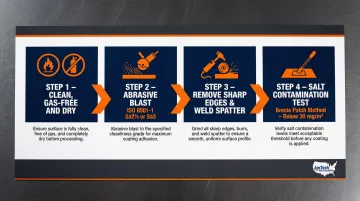
Poor surface preparation is the leading cause of premature coating failure, resulting in blistering, delamination, and costly rework.
Drying vs. Curing: Understanding the Difference
Drying refers to solvent evaporation, which improves application viscosity. Curing is the hardening chemical reaction that requires adequate temperature and time.
Cutting corners on curing to return the vessel to service faster is one of the most common causes of premature coating failure. Follow manufacturer cure schedules strictly.
Seawater Testing Before Cargo Service
After curing, conduct a seawater test to identify pinholes and undetected mechanical damage before the vessel enters cargo service. The tank is filled with clean seawater for 24+ hours (or recirculated for 48+ hours), then drained and inspected for rust spots. This step confirms coating integrity before the first cargo loading. Catching defects early prevents contamination claims and emergency dry-docking.
Ongoing Inspection and Repair
Routine inspections after each cargo tank cleaning should assess both cleanliness and coating condition. Look for:
- Blistering
- Cracking
- Discoloration
- Localized breakdown
Small damaged areas expand rapidly in aggressive chemical service. Repair localized breakdown immediately using vacuum blasting and spot recoating, following manufacturer procedures to ensure proper adhesion. Left unaddressed, a pinhole-sized defect can spread to a full panel failure within a single cargo cycle.
Crew Training and Cargo Sequencing
Crews must understand:
- Which cleaning agents are compatible with their specific coating type
- How to recognize signs of coating degradation
- The importance of following cargo resistance lists strictly
- When to consult the coating manufacturer before loading unlisted cargoes
Most contamination claims involve either improper cleaning or cargo sequences incompatible with the coating. Crew training directly reduces claim exposure and protects both cargo integrity and coating service life.
Frequently Asked Questions
What is tank coating in chemical tankers?
Tank coating is a protective lining applied to cargo tank interiors to prevent corrosion, structural damage, and contamination of liquid chemical cargoes during transportation. Without it, even brief contact between reactive cargo and bare steel can compromise both the vessel's structure and the cargo itself.
What is the purpose of tank coating in chemical tankers?
Tank coating serves a dual purpose: protecting the tank's structural steel from corrosion and chemical attack, and preventing cargo contamination by ensuring the tank interior does not react with or absorb the cargo.
What are the main types of tank coatings used in chemical tankers?
The five primary types are stainless steel (a tank material that functions as a lining), pure epoxy, phenolic epoxy, zinc silicate, and high-performance polymer coatings. Each serves a different cargo profile and trade requirement.
What are Type 1, Type 2, and Type 3 chemical tankers?
These IMO classifications reflect cargo hazard levels. Type 1 vessels handle the most dangerous chemicals requiring the strictest containment standards, Type 2 handle moderately hazardous cargoes, and Type 3 handle the least hazardous—with coating requirements increasing in stringency from Type 3 to Type 1.
What is the best coating for acid tanks in chemical tankers?
For highly acidic cargoes — inorganic acids, phosphoric acid, and similar chemicals — stainless steel and high-performance polymer coatings (highly cross-linked systems) offer the broadest resistance. Pure epoxy and zinc silicate provide limited protection against strong acids and are not suitable for acid tank applications.
What is MarineLine coating?
MarineLine is a brand of high-performance polymer coating developed by Advanced Polymer Coatings, using a highly cross-linked polymer structure that creates an ultra-smooth, nearly impermeable surface. It offers broad chemical resistance, low cargo absorption, and easier tank cleaning compared to epoxy and zinc silicate coatings.