What types of pipelines can AmTech monitor and inspect?
We inspect all industrial and municipal pipeline types including petroleum product lines (crude oil, gasoline, diesel, jet fuel), chemical transfer lines, water distribution mains, wastewater force mains, and process piping in manufacturing facilities. Our ultrasonic testing equipment works on steel, fiberglass-reinforced plastic (FRP), and concrete pipelines regardless of diameter or wall thickness. We serve above-ground and underground installations across all 50 US states, Canada, and the Caribbean with equal expertise in pressurized and gravity-flow systems.
How does ultrasonic leak detection work?
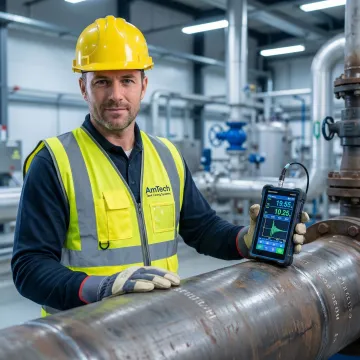
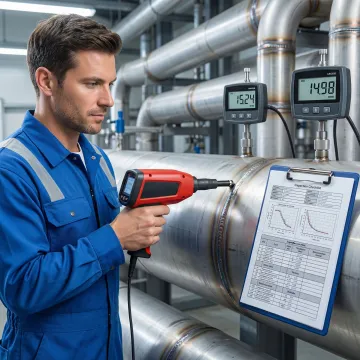
Ultrasonic testing uses high-frequency sound waves transmitted through the pipeline wall. The equipment measures the time it takes for sound waves to reflect back, calculating precise wall thickness. By testing at multiple points along the pipeline, our NLPA Special Inspector-certified technicians create detailed corrosion maps identifying areas of wall thinning, permeations as small as 0.001 inches, and structural anomalies invisible to the naked eye. This non-destructive method allows complete pipeline assessment without excavation, cutting, or service interruption.
What regulatory standards does your pipeline inspection meet?
All AmTech pipeline inspections meet or exceed EPA regulations for underground storage tank systems, API Standard 653 for tank and pipeline integrity assessment, NFPA codes for petroleum handling systems, and ANSI requirements for pressure piping. Our NLPA Special Inspector certification ensures compliance with federal and state environmental regulations including 40 CFR Part 280. Detailed inspection reports include all documentation required for regulatory submittals, insurance underwriting, and facility compliance audits with chain-of-custody data integrity.
How quickly can AmTech respond to a pipeline leak emergency?
Our emergency response teams mobilize within hours of notification with containment equipment, leak sealing materials, and repair systems ready for immediate deployment. We maintain strategically positioned field crews across North America enabling same-day or next-day response to most locations in the continental United States and Canada. Emergency services include temporary leak containment using PLS 755 Tank Tape, composite wrap repairs, rapid section replacement, and environmental remediation support to minimize facility downtime and prevent regulatory violations.
What is the typical cost of pipeline integrity testing?
Pipeline inspection costs vary based on total linear footage, accessibility, pipeline diameter, testing density requirements, and whether excavation is needed for external inspection. A basic ultrasonic thickness survey for a 500-foot underground petroleum line typically ranges from $3,500 to $7,000 including reporting. Complex projects involving multiple pipeline segments, difficult access conditions, or comprehensive integrity assessments requiring detailed corrosion mapping will be higher. We provide detailed written estimates after initial site assessment outlining scope, methodology, deliverables, and timeline.
Can you install continuous monitoring systems on existing pipelines?
Yes, AmTech retrofits existing pipeline systems with automated leak detection and continuous monitoring technology. Installation methods vary by application—interstitial monitoring for double-wall systems, acoustic sensors for real-time leak detection, and pressure/flow monitoring integrated with facility SCADA systems. Our engineering team designs monitoring solutions compatible with your existing infrastructure, providing 24/7 surveillance with configurable alert thresholds. Systems include data logging for regulatory compliance documentation and trend analysis to predict maintenance needs before failures occur.
How often should pipelines be inspected for integrity issues?
Inspection frequency depends on pipeline age, stored substances, corrosion history, soil conditions, and regulatory requirements. EPA regulations mandate annual monitoring for certain underground petroleum systems. High-consequence pipelines carrying hazardous materials may require semi-annual or quarterly assessments. As a baseline, we recommend comprehensive ultrasonic testing every 3-5 years for stable systems, with annual visual inspections and monitoring system verification. Pipelines over 30 years old, those with previous leak history, or systems in corrosive environments benefit from annual detailed integrity testing.
What information is included in your pipeline integrity reports?
Our comprehensive reports include color-coded pipeline condition maps showing wall thickness measurements at all test points, calculated corrosion rates with projected failure timelines, photographic documentation of external conditions and access points, regulatory compliance certification statements, and prioritized repair recommendations with cost estimates. Reports detail testing methodology, equipment calibration records, inspector certifications, and chain-of-custody documentation. All data is provided in both printed format and digital files compatible with facility maintenance management systems for long-term record keeping and trending analysis.