How often should a commercial water tank be cleaned?
Commercial water tanks should be cleaned and inspected at minimum every 3 to 5 years to maintain water quality, regulatory compliance, and structural integrity. However, tanks serving healthcare facilities, food processing operations, or other sensitive applications may require annual cleaning. Factors influencing cleaning frequency include local health department regulations (many jurisdictions mandate biennial cleaning), stored water quality and source conditions, tank material and age, history of sediment or biological growth, and the presence of protective linings. AmTech recommends scheduling professional inspection between cleaning cycles to identify early signs of scale buildup, corrosion, or lining degradation that could accelerate the need for intervention.
How much does a tank clean cost?
Industrial tank cleaning costs typically range from $5,000 to $50,000+ depending on tank size, material, stored product history, accessibility, surface preparation requirements, and project complexity. A 10,000-gallon above-ground steel water tank requiring basic cleaning and surface preparation might cost $8,000–$15,000, while a 500,000-gallon petroleum storage tank requiring confined space entry, vapor control, sludge removal, and full abrasive blasting to white metal could exceed $100,000. Additional cost factors include the presence of hazardous residues requiring specialized disposal, need for emergency or expedited service, structural repairs discovered during inspection, and geographic location. AmTech provides detailed written estimates after conducting an on-site assessment of your specific tank and cleaning requirements.
What cleaning methods does AmTech use for industrial tanks?
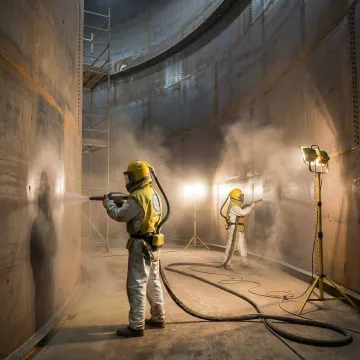
AmTech employs multiple cleaning methods selected based on tank substrate, stored product, and subsequent lining requirements. Dry abrasive blasting (sandblasting) removes heavy rust, mill scale, and coatings from steel tanks, achieving white metal or near-white surface profiles per SSPC-SP5 or SP10 standards. Wet abrasive blasting reduces dust generation in occupied facilities while achieving equivalent surface preparation. Hydroblasting (high-pressure water blasting) removes loose coatings, scale, and biological growth without substrate damage, ideal for concrete and fiberglass tanks. Chemical cleaning neutralizes and removes product residues from chemical storage tanks. Manual mechanical cleaning with power tools addresses localized corrosion and spot preparation. Our field engineers evaluate each project individually to specify the optimal method and blast media for your tank's specific conditions.
Can AmTech clean tanks while our facility remains operational?
Yes, in many cases AmTech can perform tank cleaning with minimal disruption to facility operations through strategic project phasing, redundant tank utilization, and dust-containment methods. For facilities with multiple tanks, we clean one tank at a time while others remain in service. Wet abrasive blasting and hydroblasting methods significantly reduce airborne dust compared to traditional dry blasting, allowing cleaning in occupied buildings or near sensitive equipment. For critical infrastructure like hospital water systems or 24/7 manufacturing operations, we develop custom work schedules including nights, weekends, and phased approaches that maintain continuous service. Our project engineers conduct pre-work planning sessions to understand your operational constraints and design cleaning protocols that minimize downtime, maintain safety, and meet your production or service delivery requirements.
What surface profile do you achieve, and why does it matter?
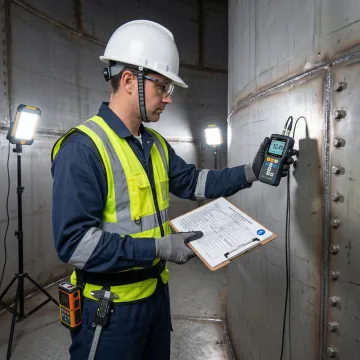
AmTech achieves precise surface profiles ranging from SSPC-SP6 Commercial Blast (2–3 mil profile) to SSPC-SP5 White Metal (3–4 mil profile) based on the specified lining system requirements. Surface profile—the peak-to-valley height of the prepared substrate—is critical because it determines the mechanical anchor pattern for coating adhesion. Insufficient profile results in premature lining failure, delamination, and substrate corrosion, while excessive profile can cause coating bridging and thin spots. Our crews use replica tape and digital gauges to verify achieved profiles before lining application proceeds. This quality control step, combined with our monitoring of ambient temperature, dew point, and humidity during cleaning, ensures optimal conditions for the HydraStone®, DuraChem® 500 series, or other lining systems we apply.
Do you handle hazardous material removal and disposal?
Yes, AmTech manages all aspects of hazardous material handling, waste characterization, and regulatory-compliant disposal for tanks that have stored petroleum products, chemicals, or contaminated water. Our crews are trained in confined space entry, hazardous waste operations (HAZWOPER), and OSHA safety protocols. We coordinate waste sampling and laboratory analysis to determine proper disposal classification, arrange licensed hazardous waste transportation, and provide all required documentation for regulatory compliance including manifests and disposal certificates. For petroleum tanks, we manage vapor control and flammable atmosphere monitoring throughout the cleaning process. This comprehensive waste management approach protects your facility from environmental liability while ensuring worker safety and regulatory compliance with EPA, state, and local requirements.
What tank materials and sizes can AmTech clean?
AmTech cleans tanks of all materials including carbon steel, stainless steel, concrete (reinforced and prestressed), fiberglass (FRP), and composite laminate construction. Our capabilities span small 500-gallon day tanks to multi-million-gallon above-ground storage tanks (ASTs) and underground storage tanks (USTs). We routinely service vertical cylindrical tanks, horizontal tanks, rectangular vaults, spherical pressure vessels, and custom-fabricated specialty tanks across industries. Our equipment inventory includes portable blast pots for confined spaces, industrial-scale plural-component systems for large tank interiors, and specialized tools for accessing remote areas through manholes and small openings. Regardless of your tank's size, shape, material, or configuration, our engineer-led field crews develop safe and effective cleaning solutions tailored to your asset.
How long does industrial tank cleaning typically take?
Project duration varies significantly based on tank size, cleaning method, surface preparation depth, and site conditions. A typical 10,000-gallon steel water tank requiring interior cleaning and commercial blast preparation takes 3–5 days including setup, cleaning, inspection, and demobilization. Large petroleum storage tanks (100,000+ gallons) requiring confined space entry, vapor control, sludge removal, and white metal blasting may require 2–4 weeks. Our DuraChem® 500 series lining systems cure instantly, dramatically reducing downtime compared to traditional multi-coat epoxy systems requiring days between coats. During pre-project planning, AmTech provides detailed schedules with milestone dates, allowing you to coordinate facility operations, plan for tank outages, and manage product supply chain requirements. Emergency cleaning services can be mobilized within 24–48 hours for critical failures.